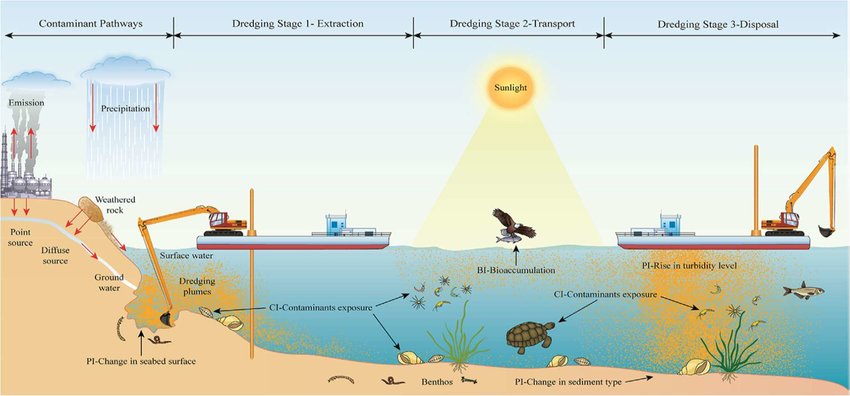
Bangladesh’s unique position within the Ganges-Brahmaputra-Meghna (GBM) delta makes dredging an essential activity. The country’s rivers carry massive volumes of sediment—estimated at around 1.1 billion tons annually, making them highly prone to siltation and frequent morphological changes. As sediment accumulates in riverbeds, the depth of navigable waterways decreases, leading to a reduction in river transport efficiency and an increase in flood risks.
A study from the Bangladesh Water Development Board (BWDB) shows that the Brahmaputra alone deposits over 600 million tons of sediment into Bangladesh’s rivers every year. This accumulation exacerbates the flooding situation, particularly during monsoon seasons.
According to research published in the Journal of Hydraulic Research, over 50% of Bangladesh’s major rivers face critical siltation issues, making dredging an ongoing necessity to maintain the country’s inland waterways.
Given the deltaic nature of Bangladesh, where two-thirds of the landmass is less than 5 meters above sea level, dredging is essential for land reclamation, flood management, and the preservation of navigable routes for inland water transport.